On the balance of probabilities, detention without trial might reduce the ability of some terrorists to commit a major attack. Rather less happily, it might also mistakenly curtail the freedoms of others, thereby sowing the seeds of dissent and increasing the likelihood of a terrorist finding a sympathetic ear. Incarceration without a defence has been a great recruiter for subversives throughout the world over centuries. America revolted in large part due to heavy-handed disrespectful treatment.
The world, and its population, are large compared to me. It's highly unlikely I'll be blown up, or locked up by the British government by mistake. What is certain, however, is that the proposed measures will change the environment in which I live irrevocably and for the worse. I will spend every minute of every day living in a state in which I might be detained without knowledge of my alleged misdemeanor or the right of representation.
Some argue that the present system needs to be changed because it needs to reduce the likelihood of failing to stop an act of terrorism. Whether these measures pass or fail, I am quite sure the government, ministers and the judiciary will continue to miss-classify the guilty as innocent and the innocent as guilty, as happens from time to time. As recently as last month our Prime Minister apologised for a particularly egregious miscarriage of justice. Unfortunate as these events are, they are inevitable. A critical component of our acceptance of them, however, is the opportunity we are given to have a hand in the game. We must be given the right of reply.
The right approach to new terrorist threats is not to replace or circumvent the judicial process but to consider and debate new laws as required.
The Government claims that it needs special powers to detain suspects with evidence that cannot be shared with the courts. Even were this to be correct in principle, in practice this government in particular has a wholly inadequate track record in the administration of terrorist intelligence. It is an appalling travesty that we should have gone to war on a false pretext, and for the leader of the government to simply say that while he was wrong about weapons of mass destruction, he acted nevertheless in "good faith". Not good enough. For us to be asked to trust this same government, or a future one, with ever more draconian powers beggars belief. I heard the Prime Minister today making the same arguments for breaking our legal process as he used to fight a war in Iraq. He has a terrible record of assessing intelligence.
Governments cannot be trusted to act in our best interests, never mind act competently. What is lacking here is the realisation that a presumption of innocence is not a blind faith in the character of the subject, but an invaluable protection against the ability of power to corrupt.
The government is blinded by the need to apprehend the criminal before she commits her crime, as though this is a special consideration that has never before required our attention. Nonsense. Every speeding fine is to avoid the ultimate problem of an accident. We have invented a rule, speeding, that in itself is not actually bad but because it often leads to a bad outcome has become a line in the sand that the law deems we must not cross. So it must be with terrorism.
The government needs to find a way of creating better laws that would mitigate the terrorist threat, laws that can be tested in court, a process that can act as a better test of paranoia on behalf of the government than a BBC breakfast current affairs wireless programme.
I am very concerned that the greatest threat to the British way of life appears to be not the Soviet army, the IRA or religious terrorism, but the British government and its lack of opposition.
Monday, February 28, 2005
Knowledge Management
After our headlong rush towards the Internet in the 1990's and the bursting of the dot-com bubble, we are now able to pick through the spoils and build the future that the Internet originally envisaged.
Empowering people to edit and create is a critical factor. This is what HTML offered to many technicians. The anarchic Internet allows anyone with minimal technical knowledge to publish their thoughts to anyone interested in reading. The result is an extraordinary resource of knowledge that the next generations will rightly take for granted.
As technology continues to make the act of editing and publishing easier, so the technical barriers to publication will fall. We can continue to reap greater rewards from shared editing. Blogging trivialises the process of making a website. With the help of advertising models like Google's, its even possible to gain micro-payment revenue for providing resources that are invaluable to small markets. Previously, reaching such markets would have been prohibitively expensive and those resources would never have been created.
Technology provides the capability, and the market takes advantage. We're able to store and retrieve a much large fraction of the experience we gather as thinking beings than ever before. This is the age of knowledge management - a quantitive change in our ability to work with information that leads to a qualitative change in our ability to understand and progress.
Empowering people to edit and create is a critical factor. This is what HTML offered to many technicians. The anarchic Internet allows anyone with minimal technical knowledge to publish their thoughts to anyone interested in reading. The result is an extraordinary resource of knowledge that the next generations will rightly take for granted.
As technology continues to make the act of editing and publishing easier, so the technical barriers to publication will fall. We can continue to reap greater rewards from shared editing. Blogging trivialises the process of making a website. With the help of advertising models like Google's, its even possible to gain micro-payment revenue for providing resources that are invaluable to small markets. Previously, reaching such markets would have been prohibitively expensive and those resources would never have been created.
Technology provides the capability, and the market takes advantage. We're able to store and retrieve a much large fraction of the experience we gather as thinking beings than ever before. This is the age of knowledge management - a quantitive change in our ability to work with information that leads to a qualitative change in our ability to understand and progress.
Thursday, January 20, 2005
Tim and Claire Jervis
Claire and I were married 17th December 2004 in Cambridge. Claire has her own site at http://clairejervis.com/. We live in London, with a PC and a Mac.
Friday, January 07, 2005

Sunday, December 16, 2001
Tim in Times Square
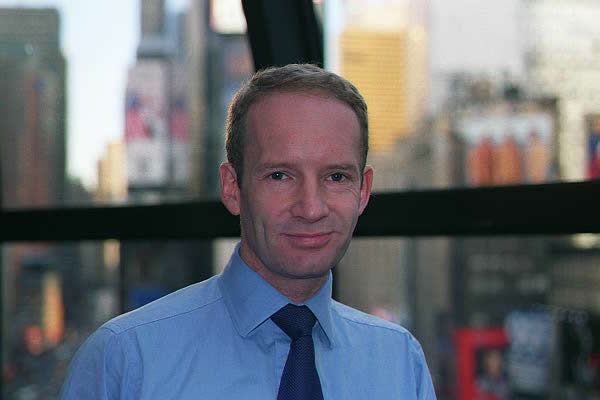
My friend Nici von Alvensleben very kindly took this photo of me in New York on December 16th 2001. This post is just to let me link my photo to a URL.
Tuesday, September 11, 2001
9/11
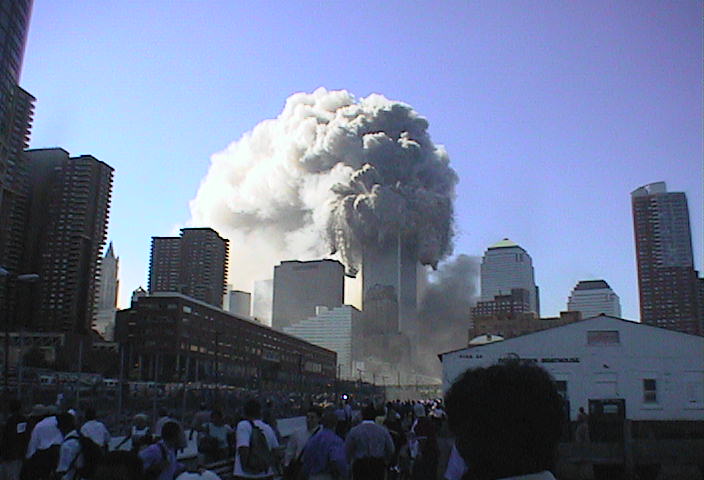
I was minding my own business just like most of the rest of us on September 11th 2001, when my room-mate told me an airplane had crashed into the World Trade Centre. We thought it must have been an accident, much like the B52 that hit the Empire State building in 1945. I picked up my digital camera and roller-bladed down from our apartment on 44th at Times Square to see what was going on, and witnessed the event that changed the world and ended the halcyon 1990s.
My amateur video from the same camera is here, showing the tower falling.


Friday, January 26, 2001
Laser Eye Surgery - the blog
Yesterday I had LASIK laser eye surgery. In short, this is where they take the front part of your eye off, burn a pattern on the surface of the underlying cornea, and put the front bit back on again.
In long...
You have a consultation where your prescription, your pupil size and the shape of your cornea is measured, and they work out if the treatment is possible. Although they can correct myopia and astigmatism, they can't correct everything, such as keratoconus. They also measure the thickness of your cornea to ensure there's enough material to work on. Presumably this is to avoid burning right through your eyeball and making a mess of their shiny new laser by covering it with whatever fluid that might erupt henceforth. Yum.
Having passed over those hurdles, I returned yesterday for the treatment itself. I decided to go to Boots in Regent St., London, on the basis that I'd have easier access to lawyers and a support environment in the UK if something went wrong, than I would in the USA. Also, Nadine works at Boots so it must be good. It was about 50% more expensive than in New York, but then Nadine does get to drive a nice car, and you don't have to tip the surgery when you leave. I was escorted there by the lovely Nurse Melanie. Those of you who know her will not be surprised by the fact that one of the nurses had to explain to Mel, after I'd returned from the Abyss (more below), "you're not meant to be laughing, you know".
Having arrived for the treatment, I sat done with Mel to eat lunch. Shortly thereafter I was rudely interrupted from a rather tasty chicken and mozarella sandwich by the need for yet more tests. They re-checked the measurements and explained that my left eye would be corrected to perfect vision, and my right would be left with about .25 dioptres of myopia. This was to leave a little bit more thickness in the cornea (they wanted to keep their laser clean) and might even delay the need for reading glasses in later life.
The next bit was the though bit. You lie flat on a couch. They produce a clamp that they insert into your eye to hold your eye open. Then a vacuum clamp sucks itself onto your eye. A knife appears and they slice into the top of the eye. Of course, it's your eye, so you get to see this happening. Then the laser comes. Someone explained that I'll probably smell a strange smell. I jokingly said "you mean like the smell of burning flesh?". There was no reply.
And then there was this funny smell of burning flesh.
The main problem was I'd been told the procedure would last 20 minutes. So I thought I would be lasered for 20 minutes. Actually, you're only lasered for 90 seconds. Nevertheless that expectation, plus the thought of what they were actually doing, added up to a very grim time. The guy was saying "stop rolling your eyes!" and I tried to explain, through my hyper-ventilating, that I was unable to control them. Shortly after I realised that backing out wasn't an option. All you want to do is close your eyes and get away, but you can't. Anyway, somehow it all worked out, eventually, and it was over.
But of course, the basic human model comes with two eyes.
So it was on to the next one. This time it wasn't half as bad, as I knew what to expect. Uncomfortable, but ok. I left the room and my eyesight seemed much the same. Over the next few minutes, I tried squinting through my (strong) glasses and realised that they actually made my eyesight worse. So I was now unable to see properly at all, without or without my glasses. What a bargain.
The surgeon came in a few moments later and explained that altough I'd had a "very unusual reaction" (I didn't realise most of the population didn't mind having a vacuum pump clamped to their eyeball) and that I was the most difficult patient he'd had, he was very pleased to say that the machine had done everything it needed to and he thought that I was going to be fine. Mel and I had a nice cup of tea and found plenty to laugh at, non of which I can remember now.
All I had to do then was pay. Funny how they wait until you can't see before asking you to sign the Visa slip...
I was a bit embarrassed for being so squeamish in the theatre, but they were all very nice about it. Two female nurses had been holding me down, it turns out - one with a rubber glove on too. I left before they decided to charge extra for that bit.
I noticed all sorts of things that blind people must live by - the beeps in the underground for when the doors open, the annoucements over the tannoy saying what station you're at, the rough parts of the street where the crossings are. Thankfully Nurse Mel led me back to college.
The next 20 hours or so I spent in the dark. The treatment requires a dilating fluid in the eye which renders the patient photosensitive. I just kept my eyes closed. Other than that I felt fine. My eyes stung a little but nothing too serious. I talked to Mel and called home, but I could only call people who's number I knew off by heart because I couldn't read my address book.
Today, my eyesight has been getting better and better by the minute. I learned to point my eyes in the same direction at about 11am, to read at about 11:30am, to read number plates at a distance about noon, and so on. I cancelled my direct debit for my contact lenses at 12:30. Never imagined I'd be able to do that. Focus is still a bit hazy for reading. I'm writing this because it's easier than reading. I guess it's silly to strain too much today. I get to have a checkup tomorrow.
So, did it work? The objective is to avoid carrying around glasses and contact lenses, and avoid sore dry eyes after transatlantic flights or after sleeping in contact lenses overnight. At this point, I don't know if it worked. My sight isn't as good as it was with glasses, and that wasn't as good as it was with contacts. Hopefully it'll continue to get better. If not, I'll need a new pair of glasses/contacts.
Lessons learned - 1) go with someone. But for Mel and Ma offering, I would have gone on my own without even asking someone to come along, and I'd have had to spend the night outside the clinic on Regent St. 2) it's not the painless, quick operation some of the advertising would let you believe. It's not that it hurts, particularly, so much as the thought of what's going on. Also, it takes a while to recover use of your eyes. Take two days off. 3) Contact lenses are more trouble than you realise, once you don't have to wear them. They're not perfect all the time, they can get a little dirty or dry. Even now, before my eyesight has settled down, it seems to be one of those Change Your Life things, worth every penny.
In long...
You have a consultation where your prescription, your pupil size and the shape of your cornea is measured, and they work out if the treatment is possible. Although they can correct myopia and astigmatism, they can't correct everything, such as keratoconus. They also measure the thickness of your cornea to ensure there's enough material to work on. Presumably this is to avoid burning right through your eyeball and making a mess of their shiny new laser by covering it with whatever fluid that might erupt henceforth. Yum.
Having passed over those hurdles, I returned yesterday for the treatment itself. I decided to go to Boots in Regent St., London, on the basis that I'd have easier access to lawyers and a support environment in the UK if something went wrong, than I would in the USA. Also, Nadine works at Boots so it must be good. It was about 50% more expensive than in New York, but then Nadine does get to drive a nice car, and you don't have to tip the surgery when you leave. I was escorted there by the lovely Nurse Melanie. Those of you who know her will not be surprised by the fact that one of the nurses had to explain to Mel, after I'd returned from the Abyss (more below), "you're not meant to be laughing, you know".
Having arrived for the treatment, I sat done with Mel to eat lunch. Shortly thereafter I was rudely interrupted from a rather tasty chicken and mozarella sandwich by the need for yet more tests. They re-checked the measurements and explained that my left eye would be corrected to perfect vision, and my right would be left with about .25 dioptres of myopia. This was to leave a little bit more thickness in the cornea (they wanted to keep their laser clean) and might even delay the need for reading glasses in later life.
The next bit was the though bit. You lie flat on a couch. They produce a clamp that they insert into your eye to hold your eye open. Then a vacuum clamp sucks itself onto your eye. A knife appears and they slice into the top of the eye. Of course, it's your eye, so you get to see this happening. Then the laser comes. Someone explained that I'll probably smell a strange smell. I jokingly said "you mean like the smell of burning flesh?". There was no reply.
And then there was this funny smell of burning flesh.
The main problem was I'd been told the procedure would last 20 minutes. So I thought I would be lasered for 20 minutes. Actually, you're only lasered for 90 seconds. Nevertheless that expectation, plus the thought of what they were actually doing, added up to a very grim time. The guy was saying "stop rolling your eyes!" and I tried to explain, through my hyper-ventilating, that I was unable to control them. Shortly after I realised that backing out wasn't an option. All you want to do is close your eyes and get away, but you can't. Anyway, somehow it all worked out, eventually, and it was over.
But of course, the basic human model comes with two eyes.
So it was on to the next one. This time it wasn't half as bad, as I knew what to expect. Uncomfortable, but ok. I left the room and my eyesight seemed much the same. Over the next few minutes, I tried squinting through my (strong) glasses and realised that they actually made my eyesight worse. So I was now unable to see properly at all, without or without my glasses. What a bargain.
The surgeon came in a few moments later and explained that altough I'd had a "very unusual reaction" (I didn't realise most of the population didn't mind having a vacuum pump clamped to their eyeball) and that I was the most difficult patient he'd had, he was very pleased to say that the machine had done everything it needed to and he thought that I was going to be fine. Mel and I had a nice cup of tea and found plenty to laugh at, non of which I can remember now.
All I had to do then was pay. Funny how they wait until you can't see before asking you to sign the Visa slip...
I was a bit embarrassed for being so squeamish in the theatre, but they were all very nice about it. Two female nurses had been holding me down, it turns out - one with a rubber glove on too. I left before they decided to charge extra for that bit.
I noticed all sorts of things that blind people must live by - the beeps in the underground for when the doors open, the annoucements over the tannoy saying what station you're at, the rough parts of the street where the crossings are. Thankfully Nurse Mel led me back to college.
The next 20 hours or so I spent in the dark. The treatment requires a dilating fluid in the eye which renders the patient photosensitive. I just kept my eyes closed. Other than that I felt fine. My eyes stung a little but nothing too serious. I talked to Mel and called home, but I could only call people who's number I knew off by heart because I couldn't read my address book.
Today, my eyesight has been getting better and better by the minute. I learned to point my eyes in the same direction at about 11am, to read at about 11:30am, to read number plates at a distance about noon, and so on. I cancelled my direct debit for my contact lenses at 12:30. Never imagined I'd be able to do that. Focus is still a bit hazy for reading. I'm writing this because it's easier than reading. I guess it's silly to strain too much today. I get to have a checkup tomorrow.
So, did it work? The objective is to avoid carrying around glasses and contact lenses, and avoid sore dry eyes after transatlantic flights or after sleeping in contact lenses overnight. At this point, I don't know if it worked. My sight isn't as good as it was with glasses, and that wasn't as good as it was with contacts. Hopefully it'll continue to get better. If not, I'll need a new pair of glasses/contacts.
Lessons learned - 1) go with someone. But for Mel and Ma offering, I would have gone on my own without even asking someone to come along, and I'd have had to spend the night outside the clinic on Regent St. 2) it's not the painless, quick operation some of the advertising would let you believe. It's not that it hurts, particularly, so much as the thought of what's going on. Also, it takes a while to recover use of your eyes. Take two days off. 3) Contact lenses are more trouble than you realise, once you don't have to wear them. They're not perfect all the time, they can get a little dirty or dry. Even now, before my eyesight has settled down, it seems to be one of those Change Your Life things, worth every penny.
Subscribe to:
Posts (Atom)

 Posts
Posts

